In April 2026, the Oceania Championships returned to New Zealand after a lengthy break caused by the COVID-19 and calendar windows around commonwealth and world championships. For me, it was an opportunity to reignite a proud sporting tradition and reconnect a community united by a shared passion for fly fishing. Recent championships have been trans-Tasman—much like a Bledisloe Cup series between New Zealand and Australia.
The intensity and focus builds towards these events (as in any sport). In fly fishing angling intelligence, individual mental aptitude, and the balance of fine technique, calm and chaos describes the challenge for each team and angler.
After enjoying many years in the NZ flyfishing team chasing world championships, I had the privilege of achieving team and individual gold here in NZ at the 2017 Oceania Fly Fishing Championships. This gave me a deeper appreciation for these champs, the friendships and community that make this sport so special to many of us.
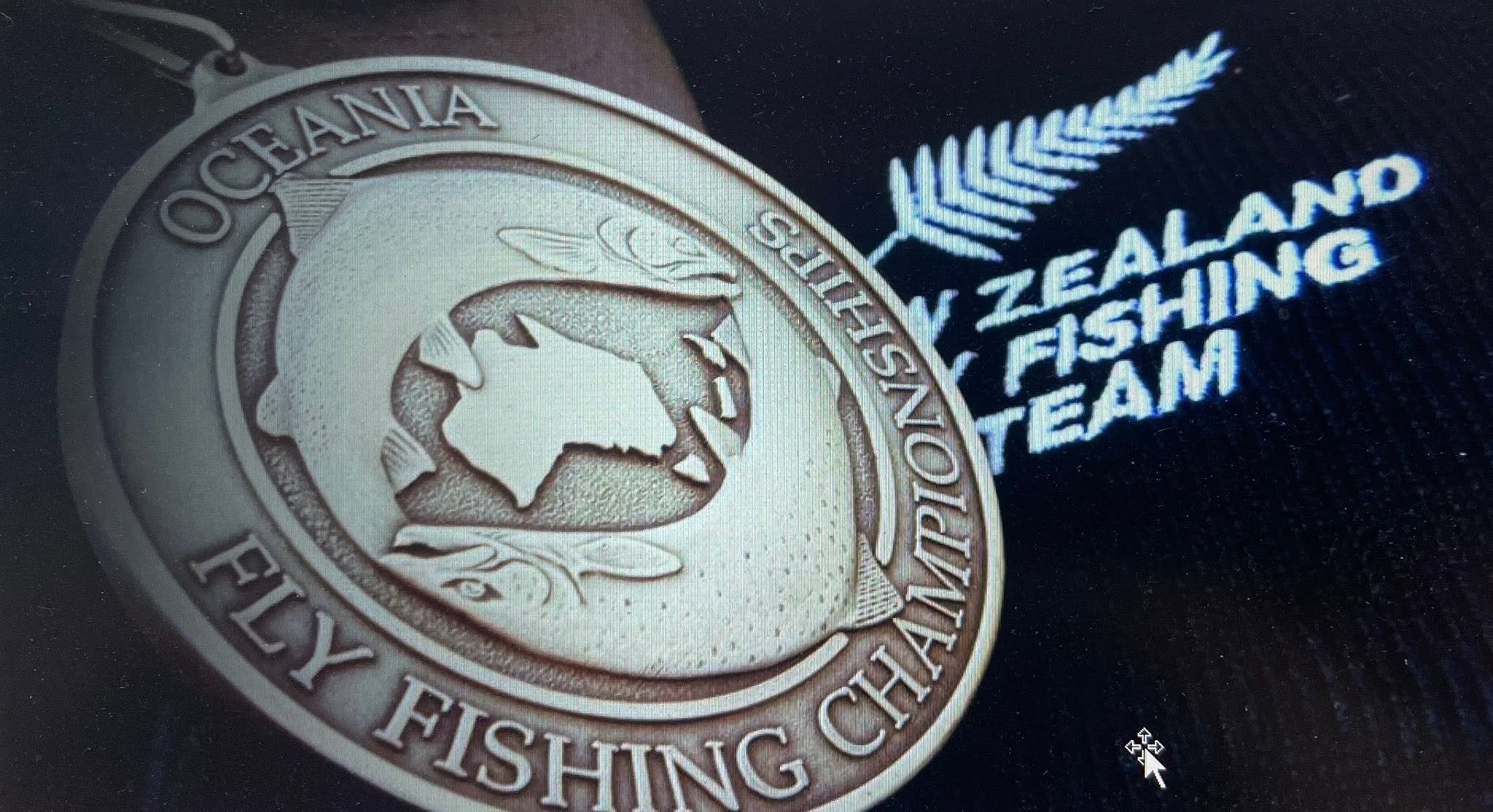
Image: Forged in Tasmania, 2017 Gold Medal
A special part of the occasion, of course, welcoming our Australian mates back across the ditch. The friendly rivalry, good-natured banter and lasting friendships are all part of what makes the Oceania Championships so unique.
Fly fishing championships are contested by teams of five anglers (in general 2 NZ teams, 2 AUS teams) the event is set across multiple days covering five x 3-hour sessions. After each session, points are tallied based on scoring fish, total fish points, and the resulting angler placement—with the top angler earning 1 point for 1st place. These session rankings are then added together across all sessions to determine the final standings for both individual anglers and team results.
With my mate and mentor Aaron West as the NZ team captain, I took up NZ Team Manager and Event Manager roles. Having once stood on the podium as a champion, it has been just as rewarding to return and help create a memory for others to experience that same sense of achievement. I felt it was time to try out the behind the scenes roles involved in the championships; to be in service to my angling mates and keep the tradition alive and kicking. For me this voluntary time recognises those who have helped shape the sport, celebrating the dedication of current competitors and creating opportunities for the next generation.
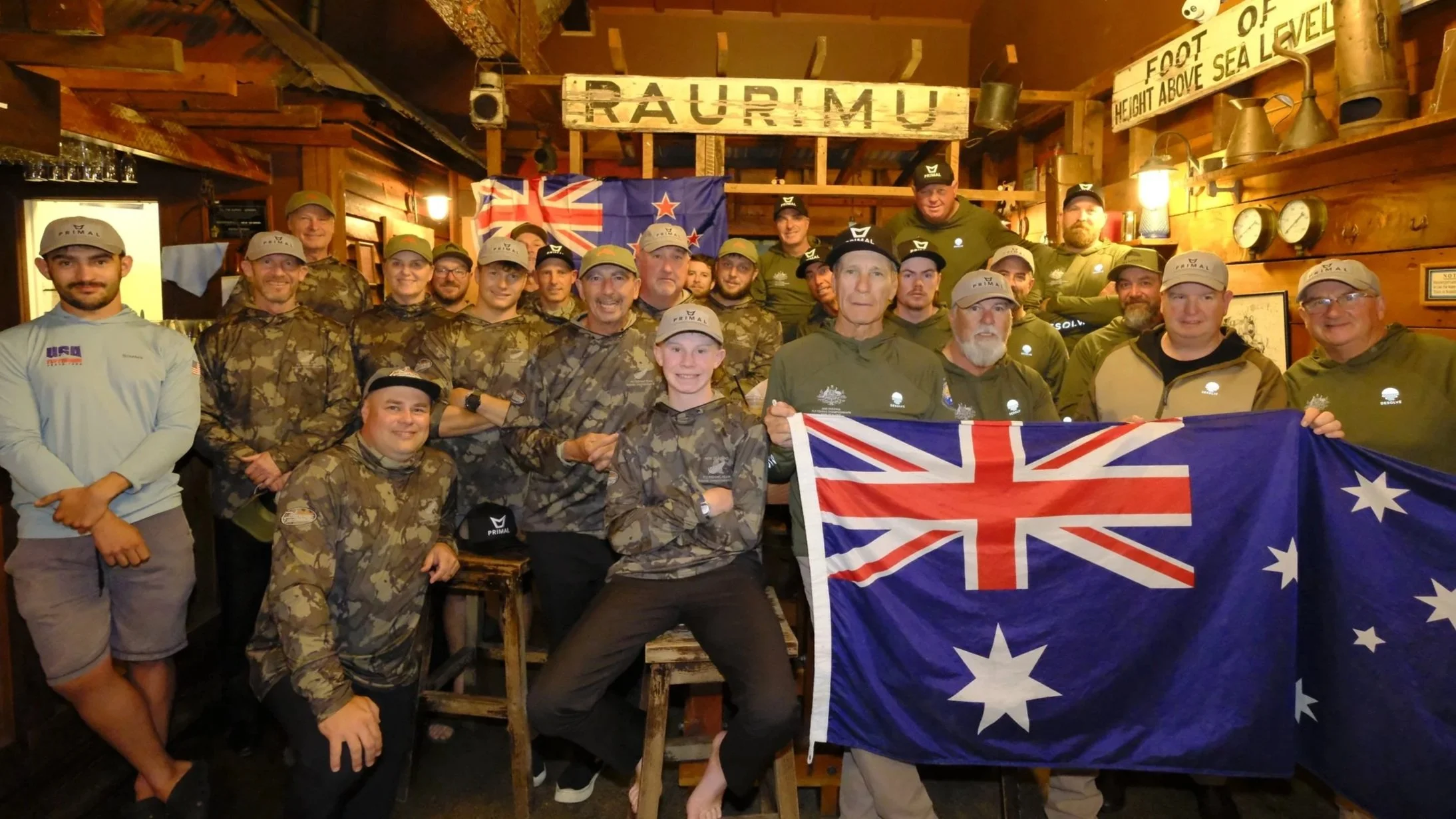
Image: The Park, Spiral Bar - NZ & AUS Teams
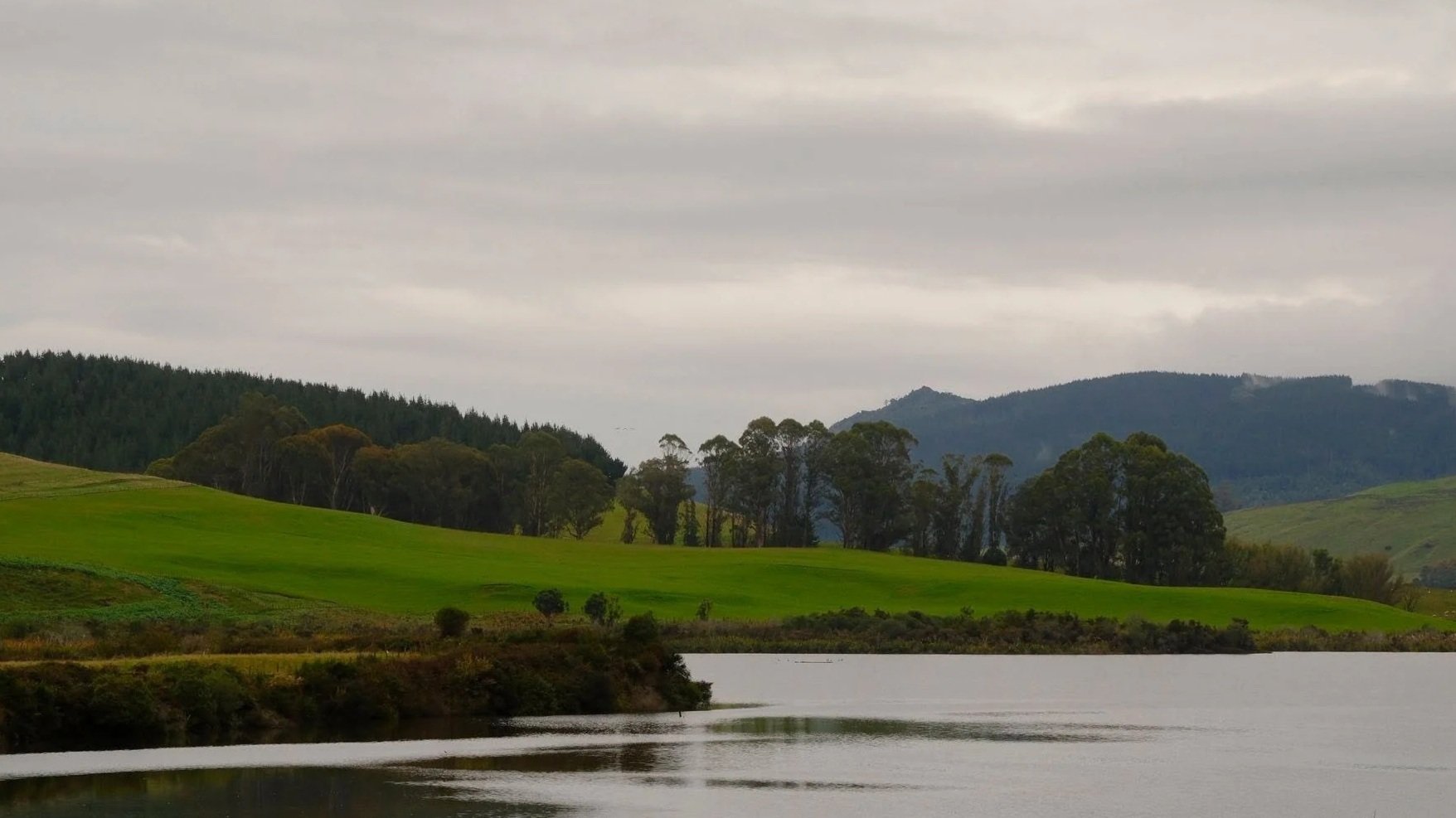
Image: Lake Kuratau - The calm amongst the pending storm
The Champs:
The anglers from both nations arrived in the central North Island in April 2026, the format looked straightforward enough: two loch-style sessions on Lake Kuratau followed by three river sessions on the Whanganui River. A classic Oceania Champs setup blending Stillwater tactics with technical river fishing.
Then the weather arrived, a captains meeting and a decision made to keep us all safe and fishing. Similar to The 2017 event, which was also weather effected, except this time round the tail of a major cyclone curled back across the country and parked itself over the region. Rain hammered the central plateau and the Whanganui transformed from a fishable flow into an absolute monster. The flows went almost biblical, a bank to bank ranging tsunami. To give a perspective a safe championship limits sat below 30 cumecs (hard but wadable conditions), and the river peaked at 572.8 cumecs.
The back up plan was enacted for all 5 session loch style fly fishing on the Lake Kuratau, roll on the champs — wild weather, epic Stillwater fishing, massive trout, and one of the closest trans-Tasman battles in recent memory.
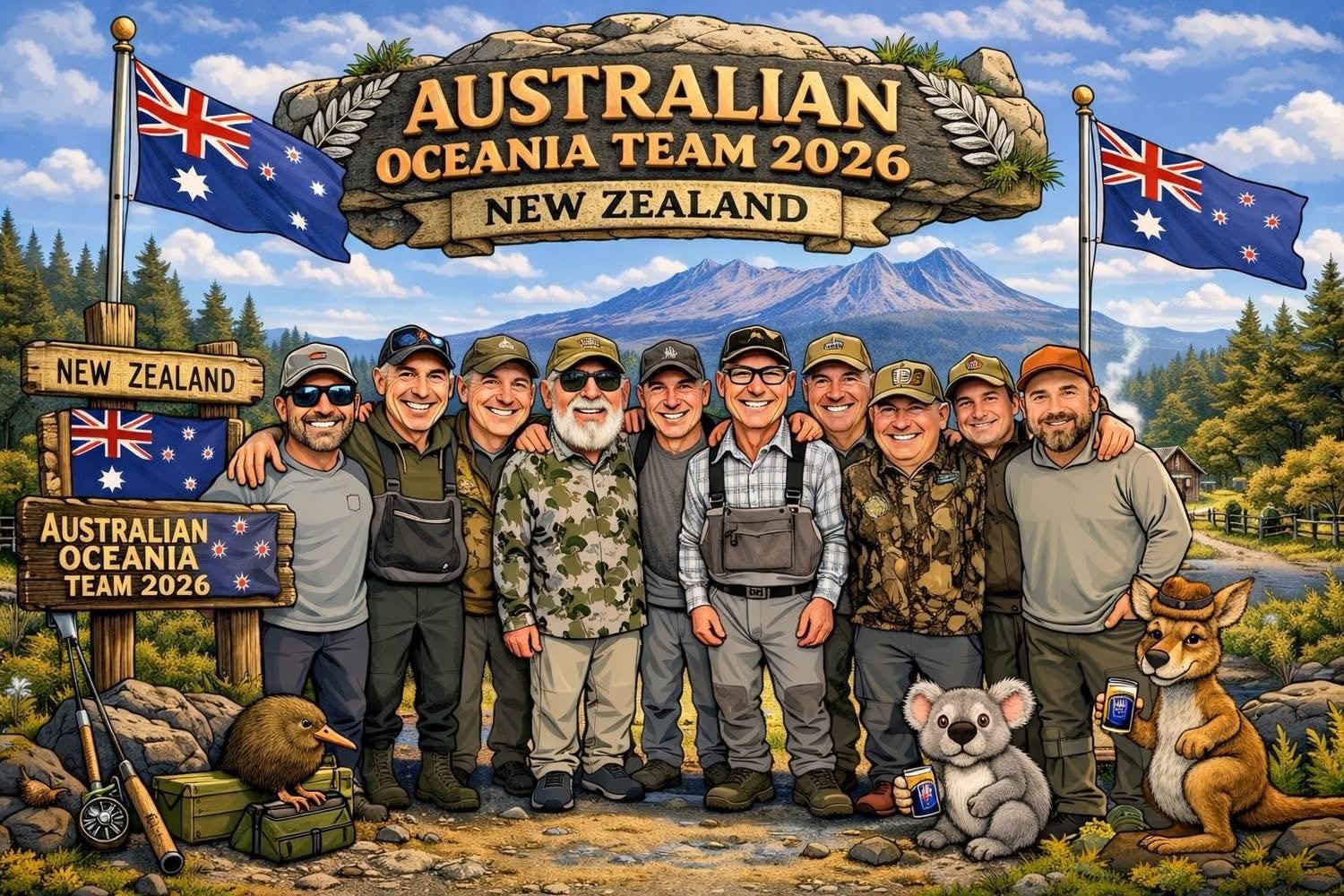
Image: Australia Teams 2016 (supplied)
For those unfamiliar with the format, Loch style fly fishing is both focussed and tactical, yet has a unique element of camaraderie. Two anglers fish from a drifting boat, trying to figure out what depth the trout are at and what they’re eating. The aim is to set up and drift to cover new fishable water constantly as the wind pushes the boats across the lake.
What followed was a championship defined not by the conditions, but the fish the anglers hoped for.
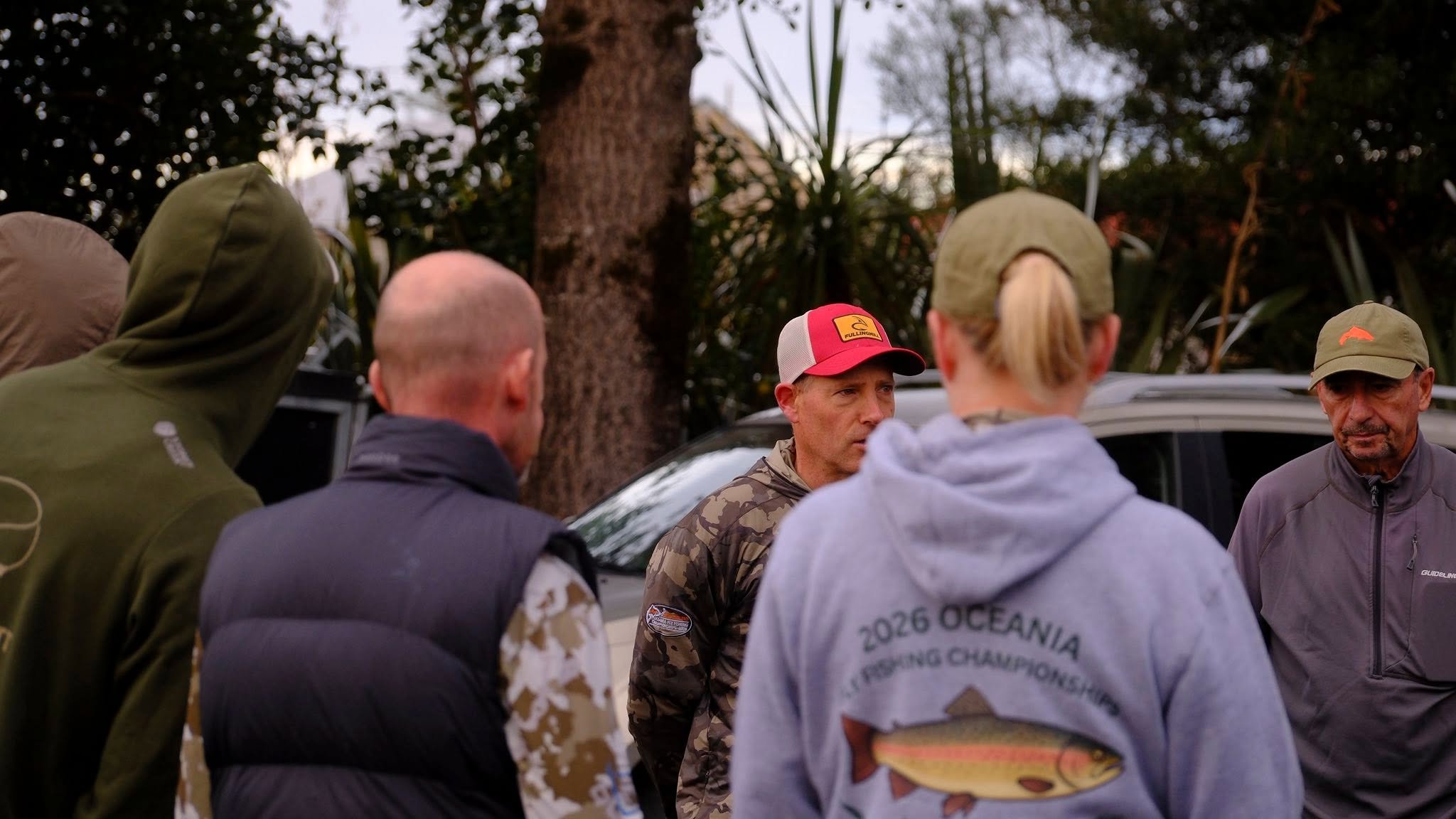
Image: NZ Team briefing
From Day 1, Lake Kuratau showed exactly why it’s regarded as one of New Zealand’s finest loch style lake fisheries. Heavy rain overnight at the competitors’ The Park Hotel base gave way to overcast skies, light showers, and a perfect riffle to the lake at start time — dream conditions, and the fishing was electric from the opening starter horn.
Both Australian and New Zealand teams posted impressive scores through the first two sessions, with fish coming steadily to the net and the atmosphere being exactly what Oceania Championships are all about — fiercely competitive but full of camaraderie.
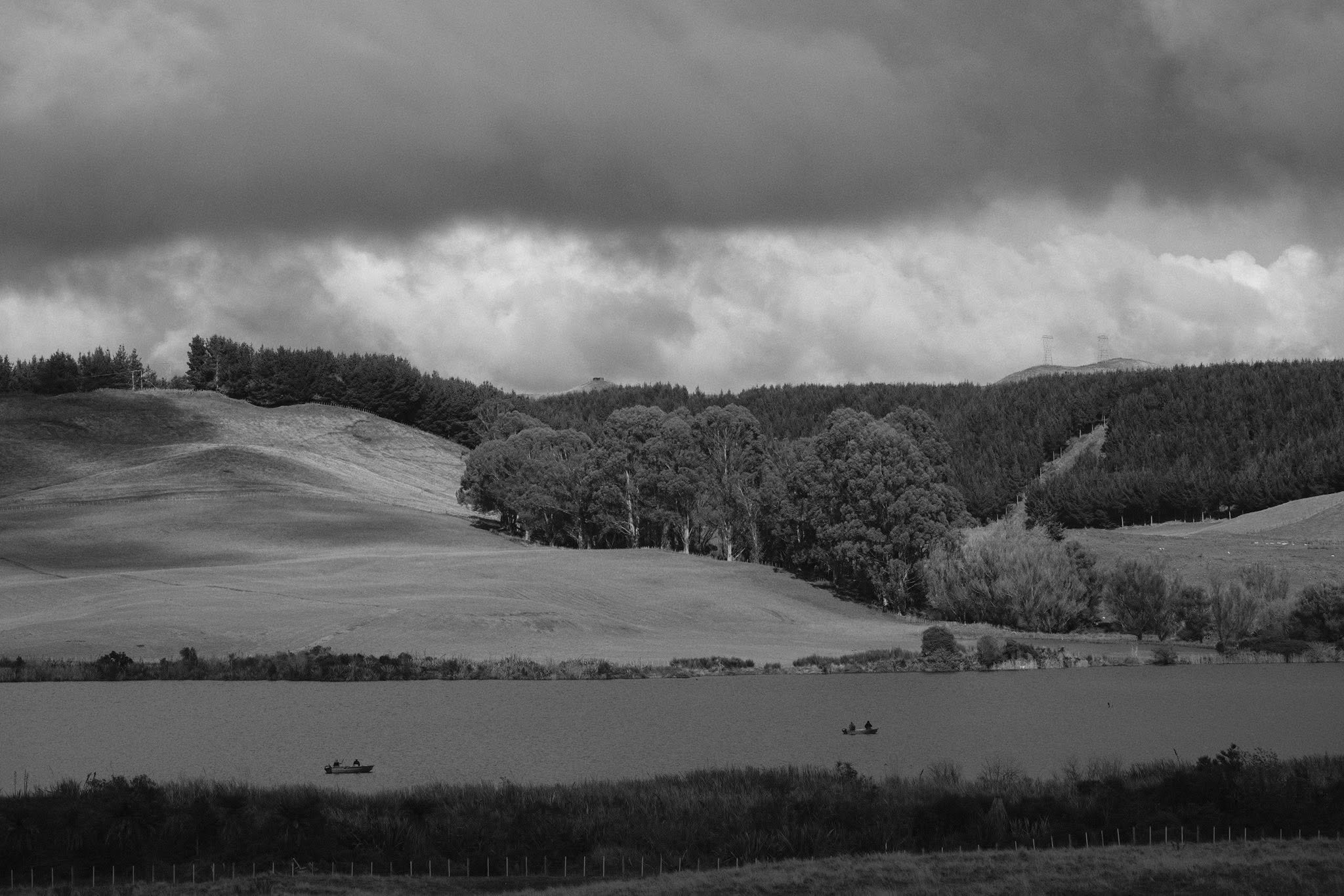
Image: Lake Kuratau
NZ Team Captain Aaron West summed it up perfectly after the opening day: “The champs are being fished in really good spirits, friendly and competitive.”
By the end of Day 1, Australia Gold held a narrow lead ahead of NZ Silver, Aussie Green, and NZ Black. Individually, NZ’s Ollie Bassett sat just a single point ahead of Australian young gun Finn McDowell, with Australian veteran Vern Barby right in the hunt as well.
Then overnight the heavens truly opened. The Whanganui River blew out and us organisers made the unavoidable call to cancel all river sessions. Now, the entire championship centred on Lake Kuratau. A decision that transformed the event.
Suddenly, adaptability became everything. Anglers who had prepared for technical river sessions now faced three straight days of changing lake conditions: heavy rain, coloured water, gale-force winds, thunder, lightning, hail and sleet, and occasional glass-calm periods - all within the same session window.
And somehow, the fishing kept producing.
Session 3 became a pressure cooker, with both nations knowing every fish mattered. The Aussie “‘Straya’ wagon,” parked proudly overlooking a productive section of shoreline, became part of the championship folklore as anglers battled for every fish in view of the van.
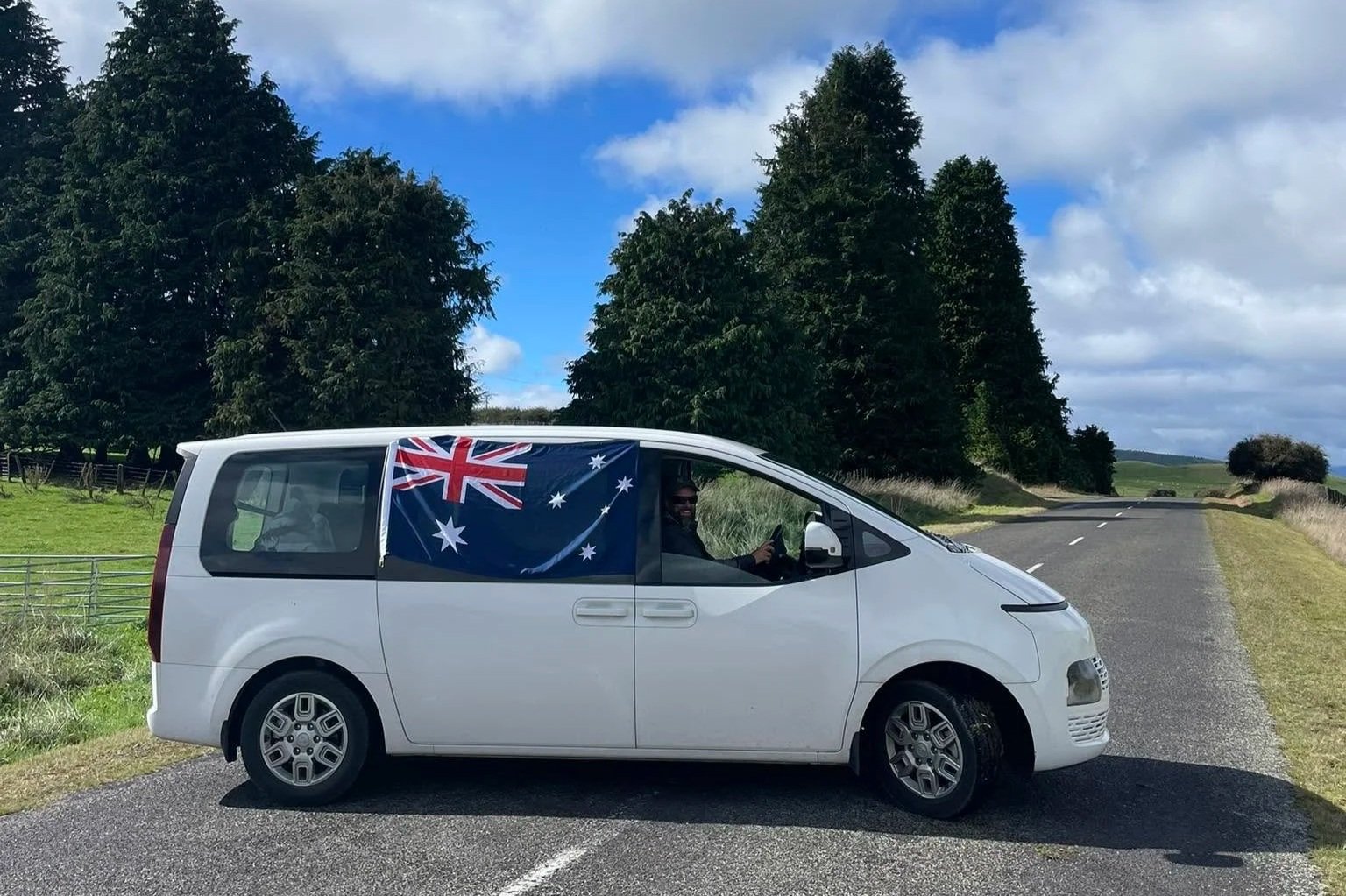
Image: The Van
By Session 4, the weather was pure chaos. “It started off miserable today, blowing a gale heavy rain, then glass-out calm conditions all in the space of one hour.” Yet even in dirty water and brutal weather, Kuratau kept producing giants.
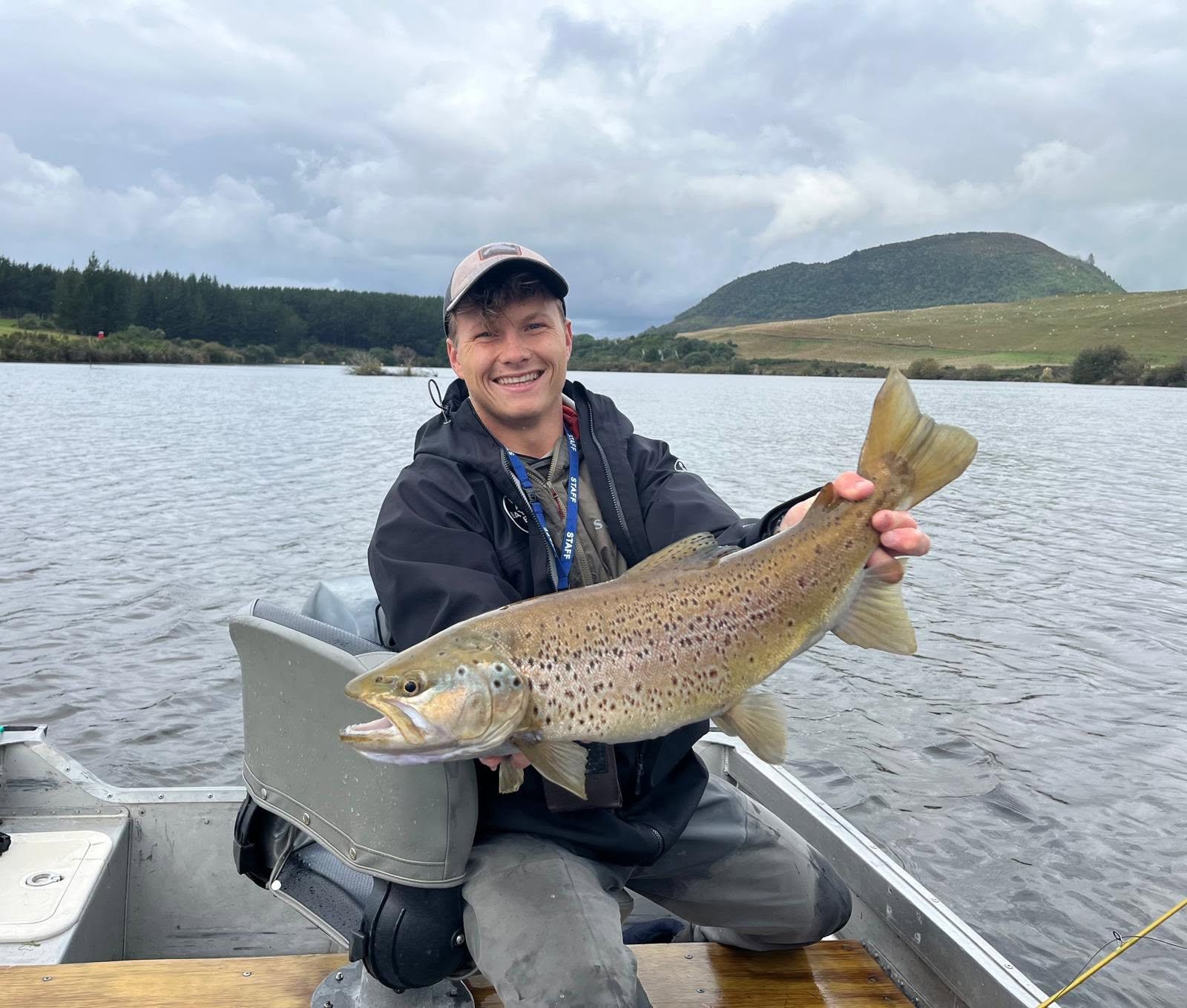
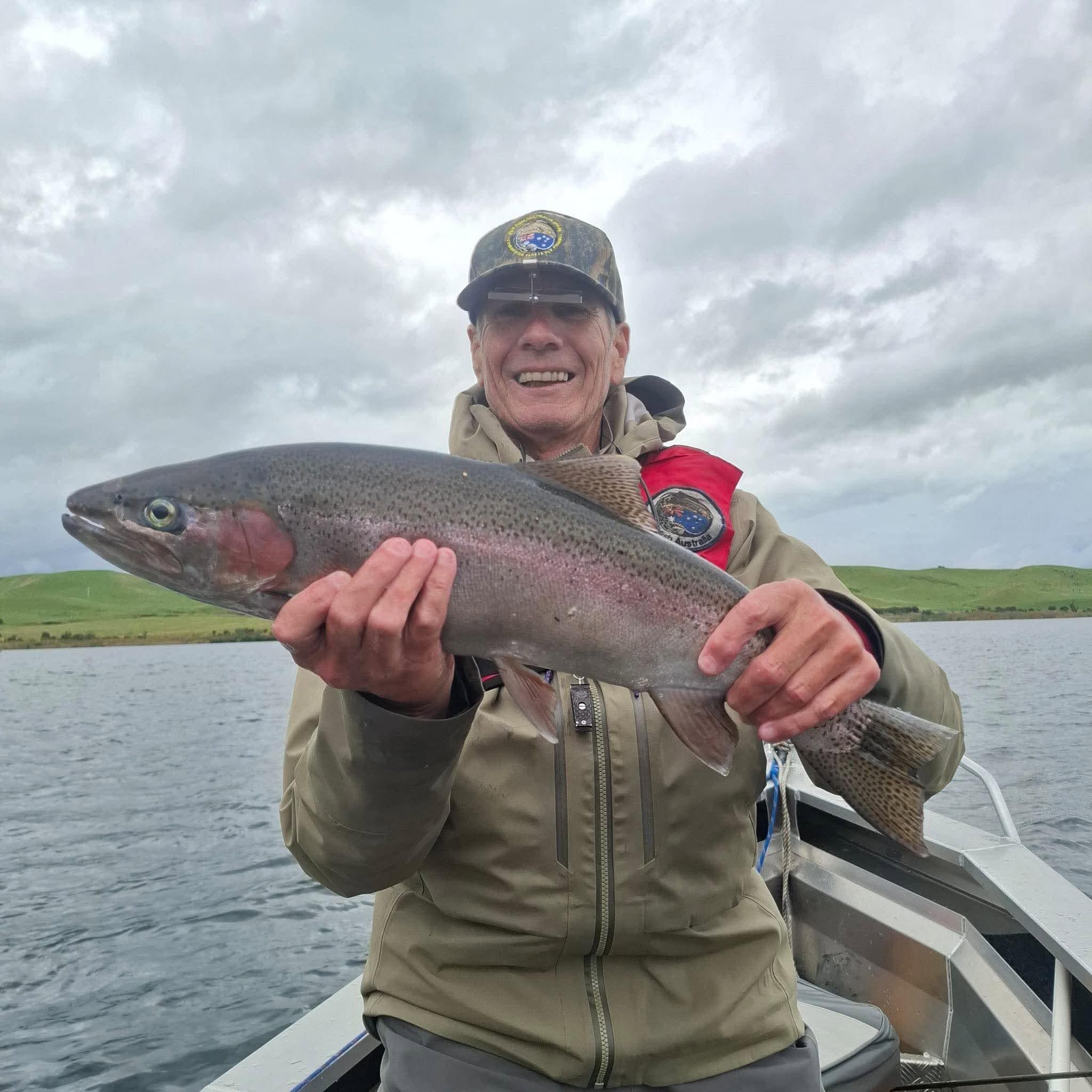
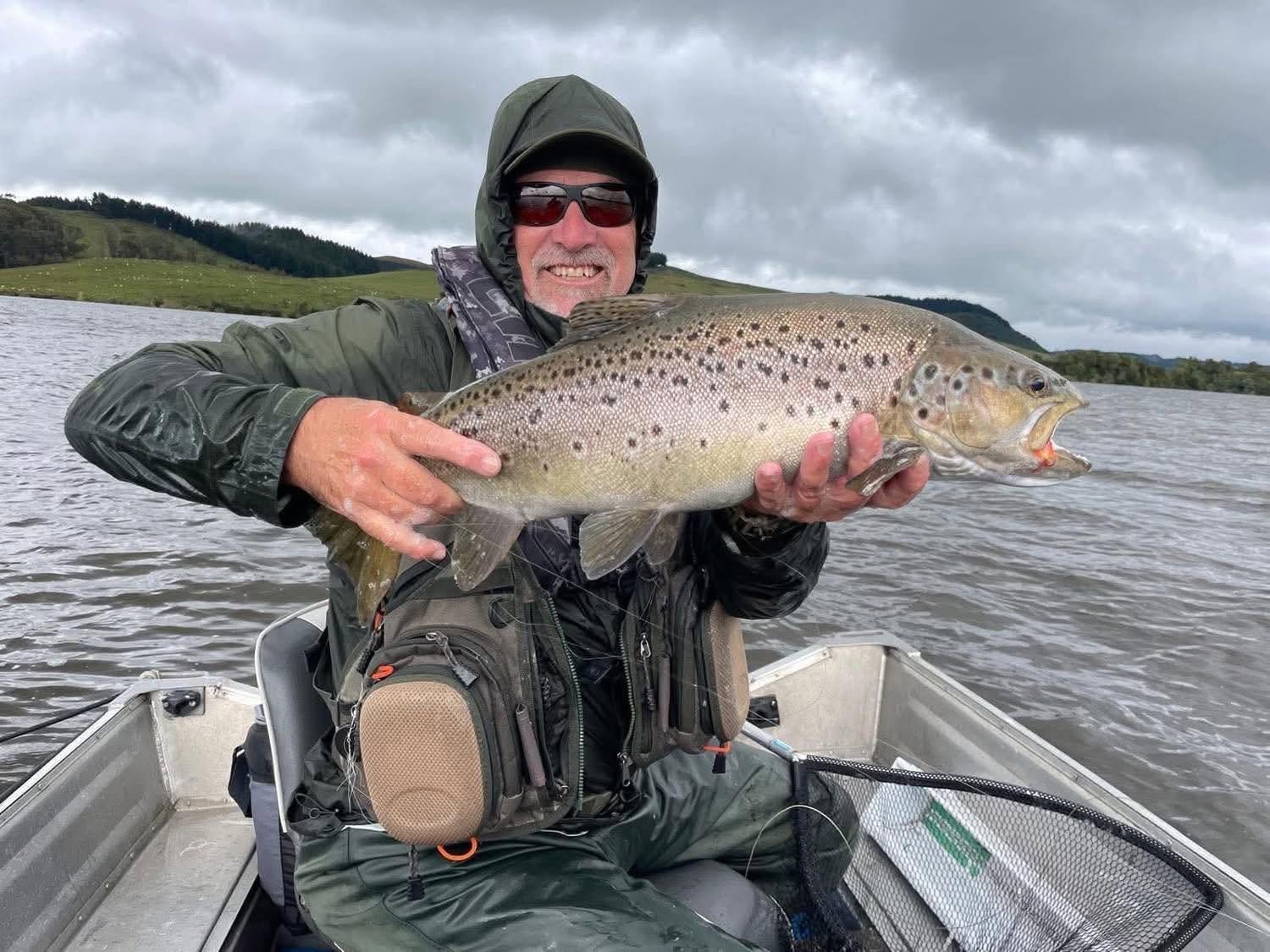
NZ angler Nathan Pollard landed a stunning 65cm brown trout. Aussie angler John Fisher put a 64cm rainbow in the net. Then NZ angler Johnny Bell landed the fish everyone would be talking about — a magnificent 67cm brown trout, a genuine trophy fish pushing into double-figure territory. Not to be outdone, Australia’s John Fisher matched it on the final day with another 67cm brown, ensuring the biggest fish award would be shared in true ANZAC spirit.
By the final morning, the championship had all the drama you could ask for.
Snow dusted the central plateau volcanoes. A bitter southerly swept across the lake. The final session would decide both team and individual honours.
At the top of the leaderboard, Ollie Bassett and Finn McDowell were locked in a brilliant battle for individual gold. NZ Silver were trying to hold off both Australian teams in the race for the team medals and Mandeno Crosse Trophy. Around them, experienced internationals fished alongside first-time representatives proudly wearing national colours for the very first time.
When the final horn sounded and the boats came off the lake for the last time, the anglers had left absolutely everything out on the water. The conversation flowed and so did the celebrations and refreshments.
In the end, NZ Silver claimed Team Gold after a remarkably consistent performance across all five sessions. The team of Ollie Bassett, Phil Connor, Nathan Pollard, Brendan Lyon, Tim Anderson, and reserve Suzie Foggo secured the medals for New Zealand.
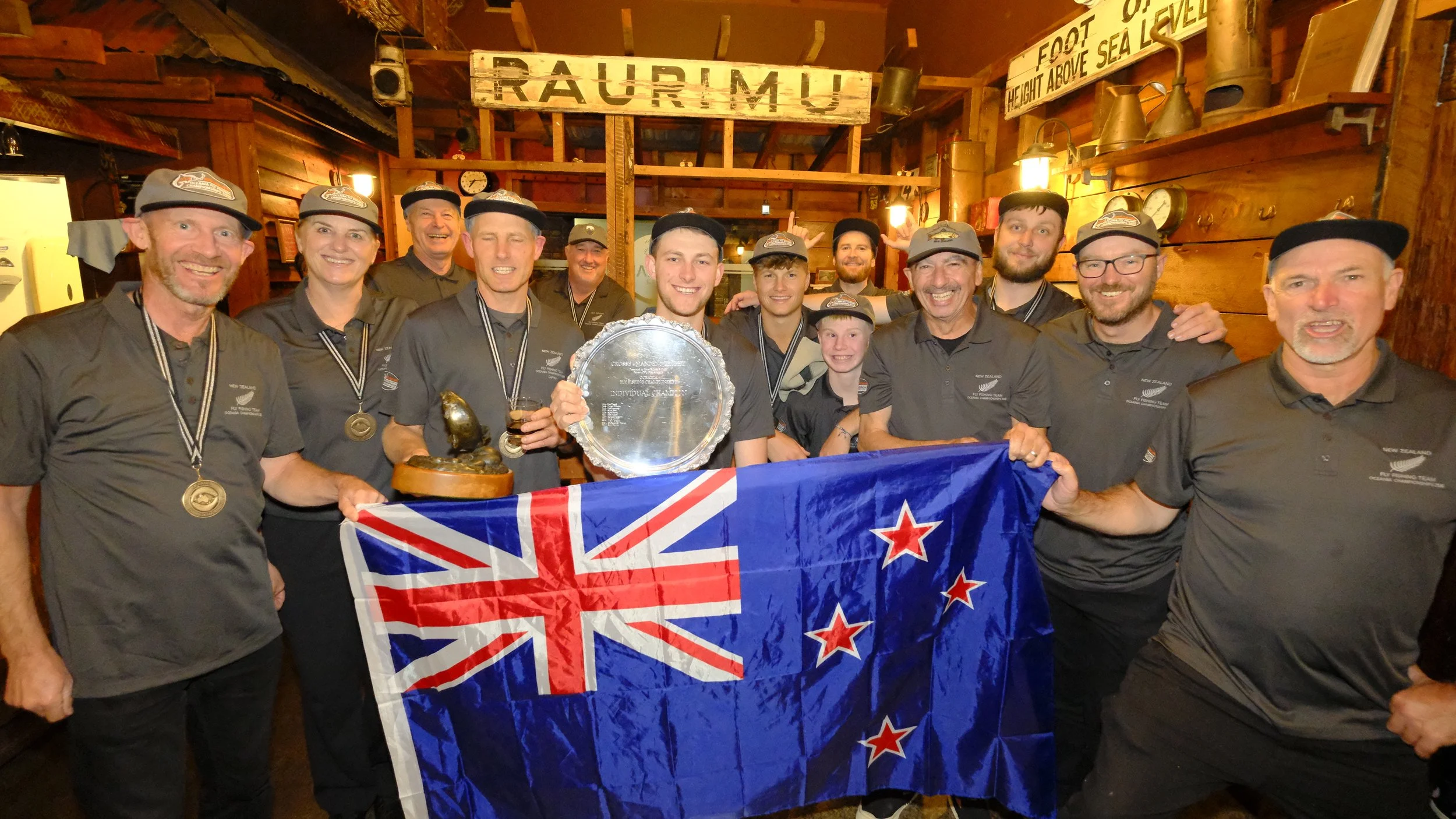
Image: NZ Team Gold
Individually, 1st Ollie Bassett held on to claim gold medal honours and the Mandeno Crosse Trophy for after a week of calm, adaptable, high-level angling in some incredibly challenging conditions. Australia’s Finn McDowell took 2nd in silver with a breakout international performance, while Australian fly fishing legend Vern Barby secured 3rd with bronze.
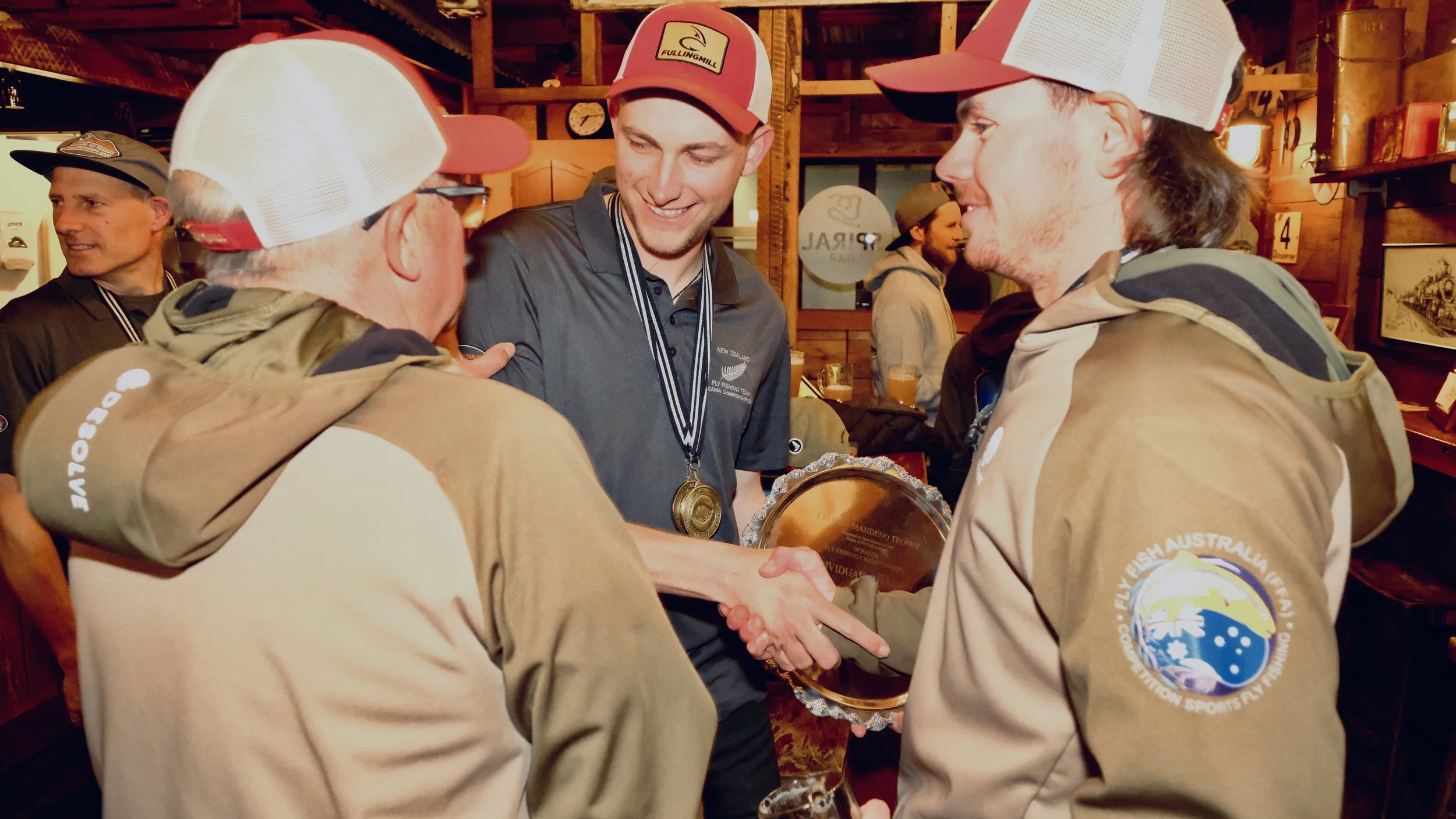
Image: The podium - Congratulations Ollie!
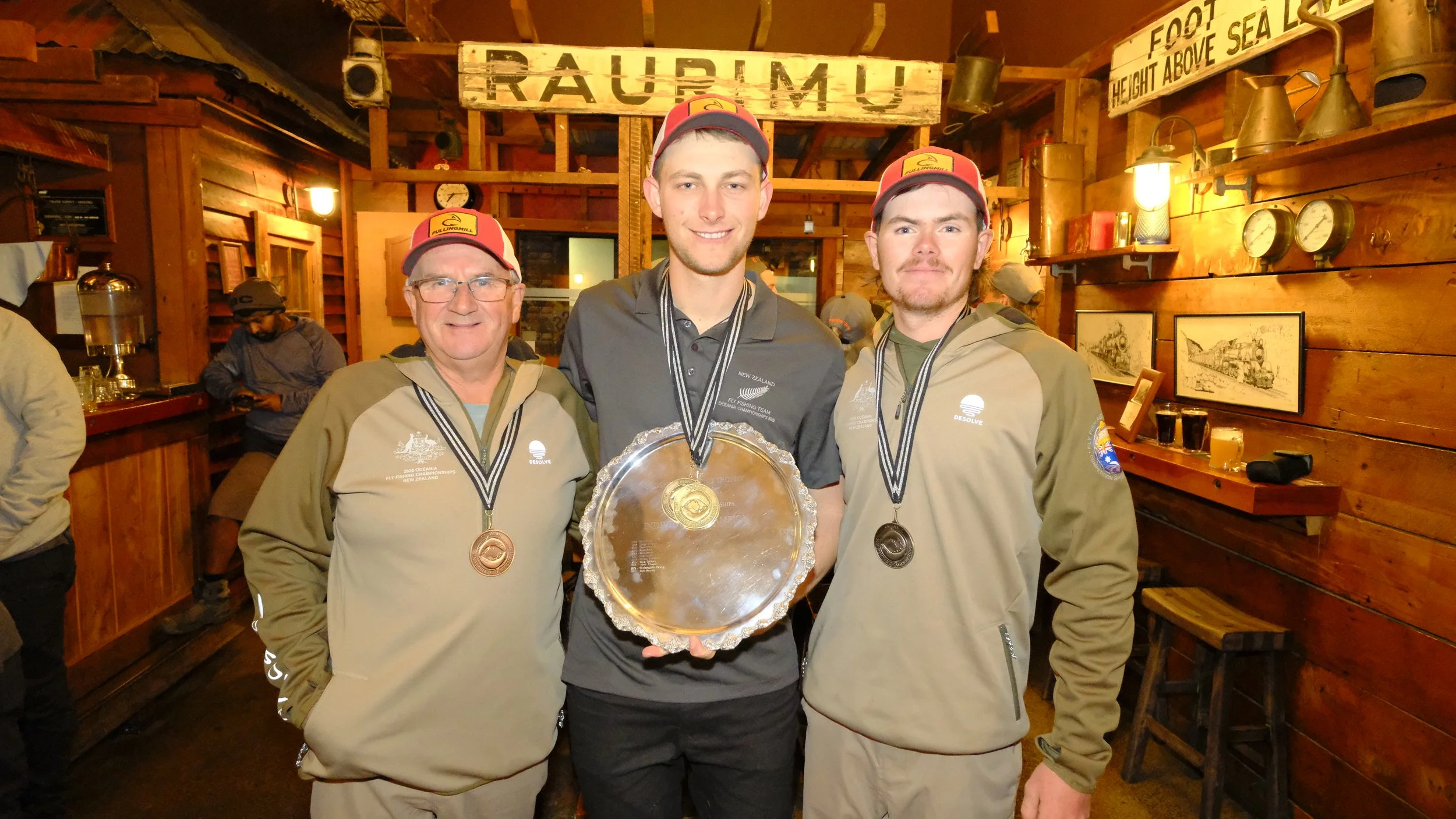
Image: L-R Vern, Ollie and Finn
But beyond medals and scorecards, this championship reminded everyone why the Oceania event matters. The championships carry the legacy of Jill Mandeno and Malcolm Crosse — two giants of NZ & AUS, Commonwealth fly fishing whose names now live forever on the Mandeno Crosse Trophy.
Throughout the week there was constant support from volunteers, judges, organisers, landowners, and sponsors. A huge thanks go to Fulling Mill, Manic Tackle Project, I love flyfishing, and Zeffer for helping make the event as sponsor, along with everyone behind the scenes who kicked this off and kept the championships running smoothly under incredibly difficult conditions, despite the storms, the floods, and the complete reshaping of the competition, the spirit of the event never wavered.
As the teams gathered at The Park Hotel for the closing ceremony, there was one overwhelming feeling shared by everyone in the room:
The weather may have tried its hardest to stop the 2026 Oceania Fly Fishing Championships — but it ended up helping create one of the most memorable Oceania events in years, and the numbers of trout recorded is a testament to this. In the end that’s exactly the sort of story anglers will still be talking about long after the rivers drop back into shape.
Full Results, see sport flyfishing nz website and communication channels.
The Names Behind the Plate:
Mandeno and Crosse. The championship trophy plate honours these two individuals who dedicated decades to the administration and growth of competitive fly fishing across the Commonwealth. The return of the tournament ensures that the Mandeno Crosse Trophy will once again be the centrepiece of trans-Tasman sporting rivalry, celebrating the enduring contributions of Jill Mandeno and Malcolm Crosse to the sport and great fishing with our mates across the ditch.
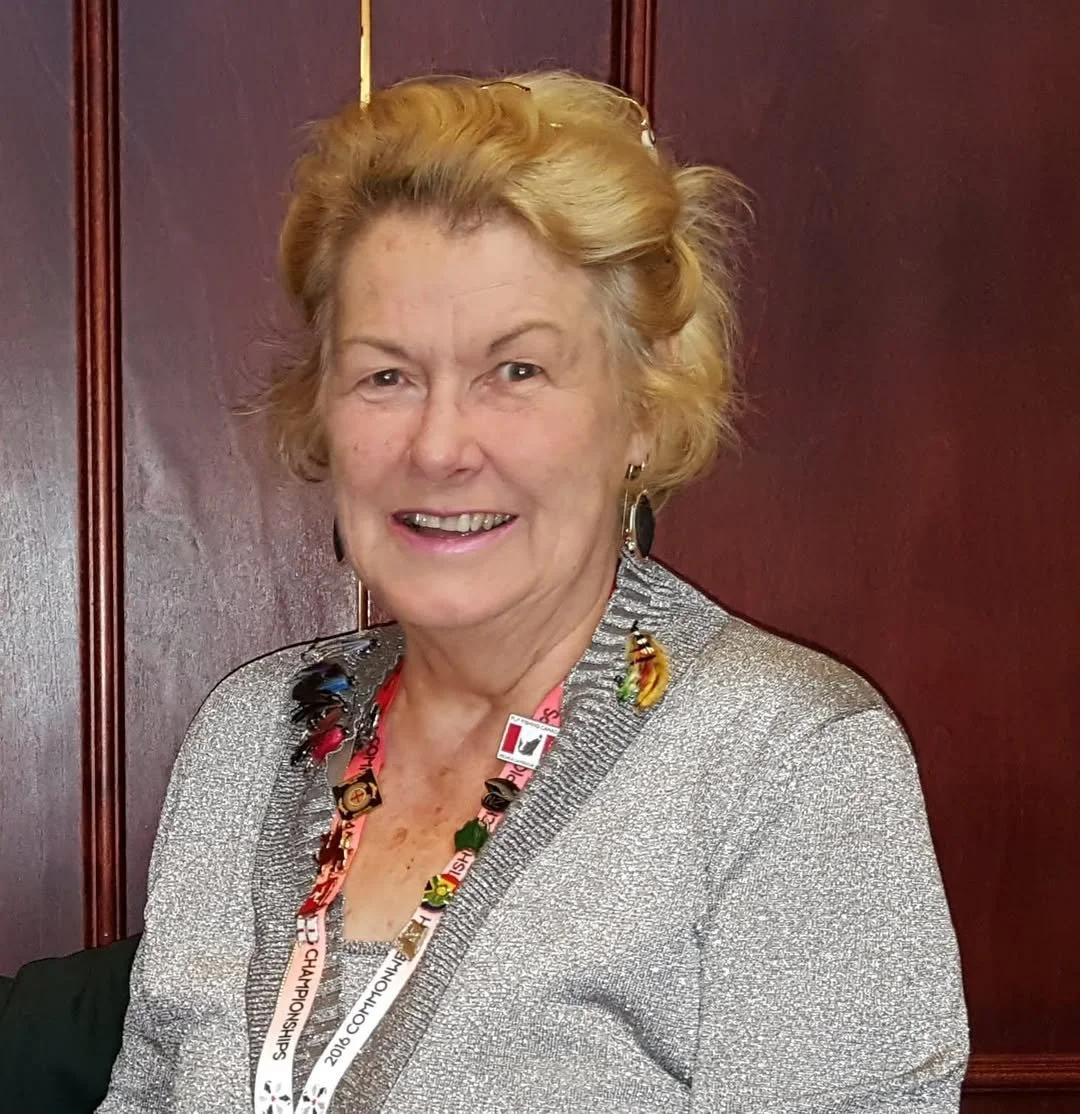
Jill Mandeno (New Zealand)
A pivotal figure in New Zealand angling, Jill Mandeno served as the long-time President of Sport Fly Fishing New Zealand (SFFNZ). She was instrumental in bringing major events to the country, including the 2008 World Fly Fishing Championships in Rotorua. Mandeno also served as a Director for the Commonwealth Fly Fishers Association (CFFA). Her legacy continues through the Jill Mandeno Trophy, inaugurated in 2022 to honour the champion female angler for sffnz.
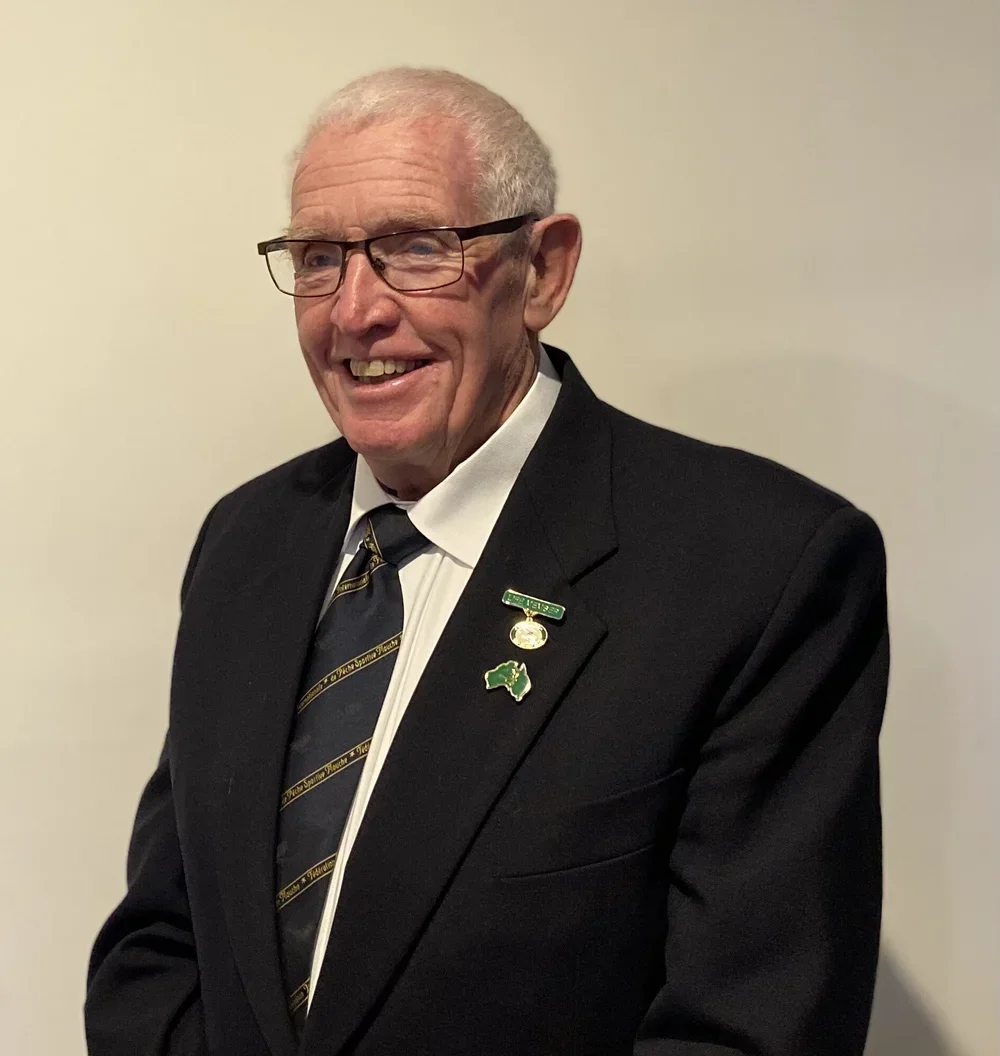
Malcolm Crosse (Australia):
A Tasmanian Angling Hall of Fame inductee, Malcolm Crosse is celebrated as an elite angler, captain, and administrator. He captained the Australian team to a World Championship victory in 1999 and served as the Vice President of the Commonwealth Fly Fishers Association. Beyond competition, he is the author of several definitive texts, including Australia's Best Trout Flies.
The Oceania Champs - Historical Performance and Recent Results:
Traditionally held every two years, the championships rotate between Australian and New Zealand venues. The competition comprises five rigorous sessions across lakes and rivers, where every millimetre of scoring fish (caught and released) counts toward the final score.
Year Location Individual Champion Team Gold
2026 New Zealand. Individual winner: Ollie Bassett (NZ) Winning Team: NZ Silver
2017 New Zealand. Individual winner: Sam Bourne (NZ) Winning Team: NZ Silver
2015 Australia. Individual winner: Chris Young (NZ) Winning Team: AUS Gold
2013 New Zealand. Individual winner: Mark Clasper (NZ) Winning Team: NZ Silver
2011 Australia. Individual winner: Craig Coltman (AUS) Winning Team: AUS Green
2009 New Zealand. Individual winner: Kiyoshi Nakagawa (NZ) Winning Team: NZ Silver
2007 Australia. Individual winner: Nick Dobbin (NZ) Winning Team: NZ Silver
2005 New Zealand. Individual winner: Steve Brown (NZ) Winning Team: NZ Black
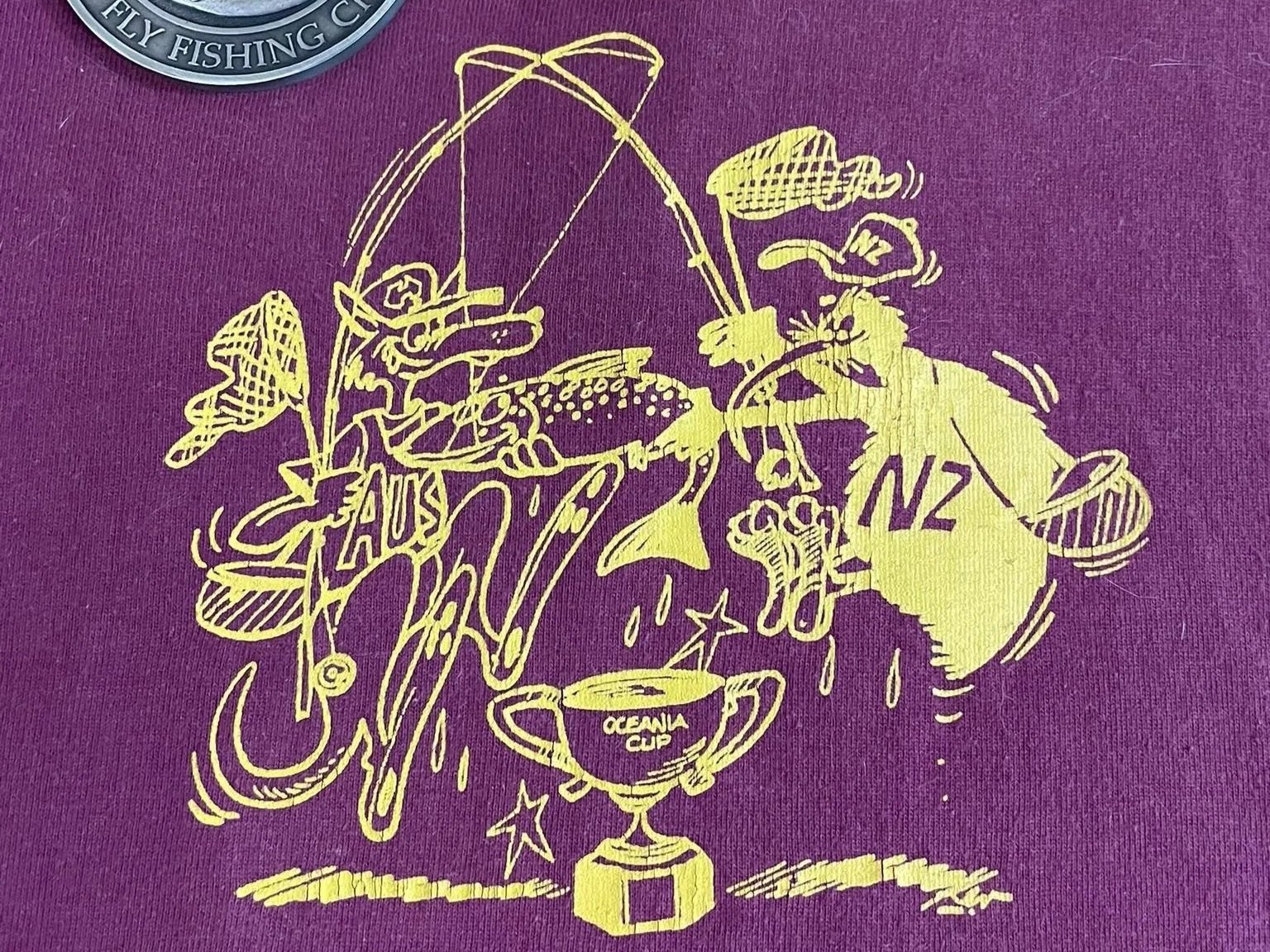
Image: Oceania merch from back in the day